Best Fence for Extreme Desert Heat in Arizona and Nevada
How composite handles 120°F sun without warping, why color choice matters in the desert, and what to spec for Phoenix, Las Vegas, and Tucson.
· 5 min read · By Compoxen Editorial
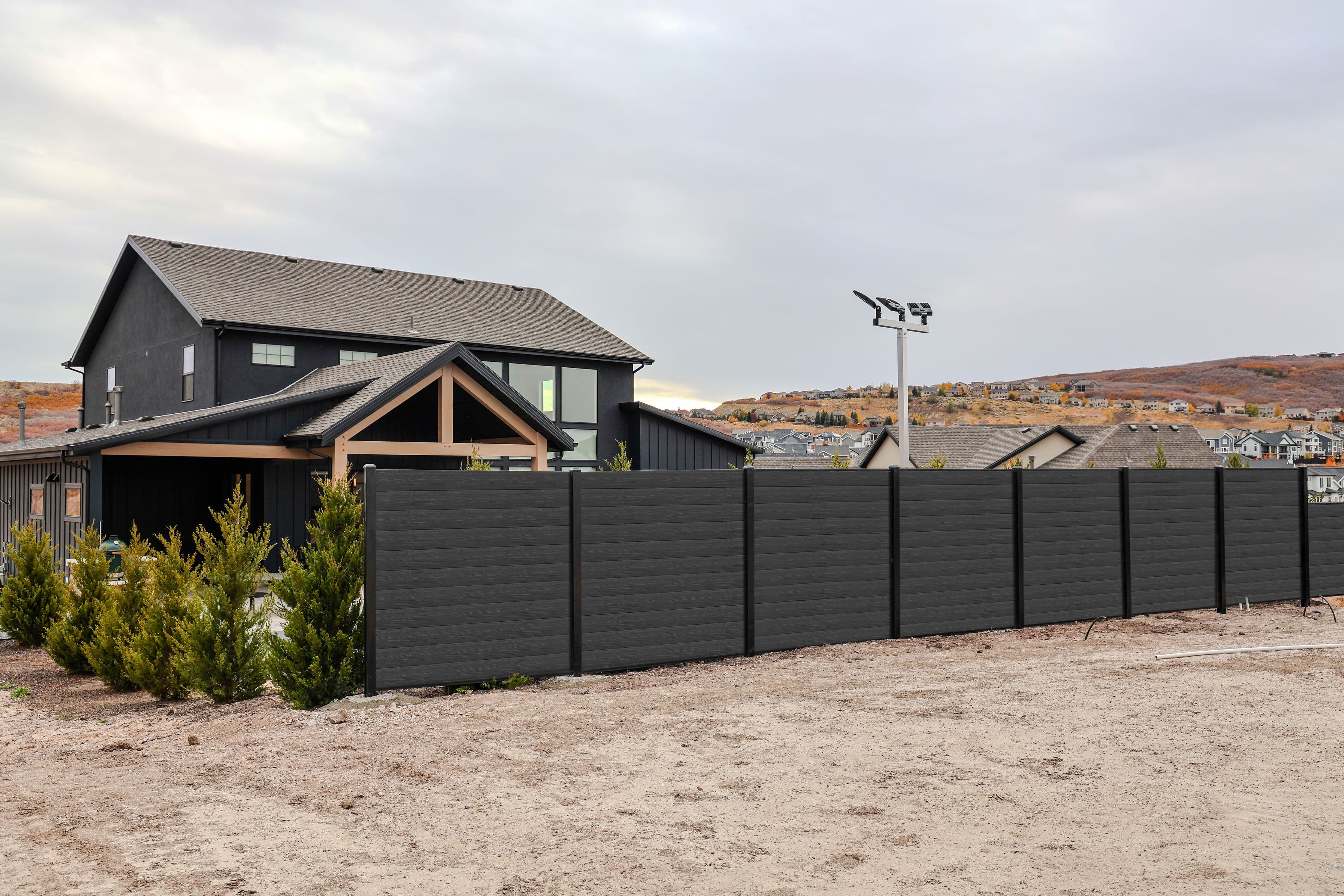
Desert fencing has one job above all others: do not warp. Wood splits, vinyl bows, and uncoated metal becomes too hot to touch. Composite was engineered specifically for this stress envelope.
Why vinyl warps in the desert
Vinyl is an all-polymer board with no mineral reinforcement. Sustained heat above ~90°F causes it to expand, and a long run will visibly bow on a hot afternoon. By the third summer, the bowing is permanent.
Why composite stays flat
Mineral filler reduces thermal expansion by roughly an order of magnitude compared to all-polymer vinyl. Compoxen is rated to 140°F surface temperature without dimensional change, which covers the full Phoenix and Vegas summer envelope.
Color in the desert
Lighter colors run cooler. All five Compoxen colors are inside the warrantied performance envelope, but if you have a south-facing exposure with no shade, Harbor Slate or Mesa Taupe will run several degrees cooler at the surface than Shadow Forge.
Privacy and dust
Desert wind moves dust. A composite privacy panel doubles as a windbreak for an outdoor living space, and the smooth shell rinses clean with a hose — no porous wood grain to trap grit.
Service area
Compoxen installs composite fencing across all of Utah — from St. George to Logan. See our service areas for the full list of cities and counties. Material ships anywhere in the continental U.S.
Ready for a real number?
We'll reply with pricing, lead time, and availability for your Utah project.
Get a Quote