
New: Now serving California —check availability

Comparison

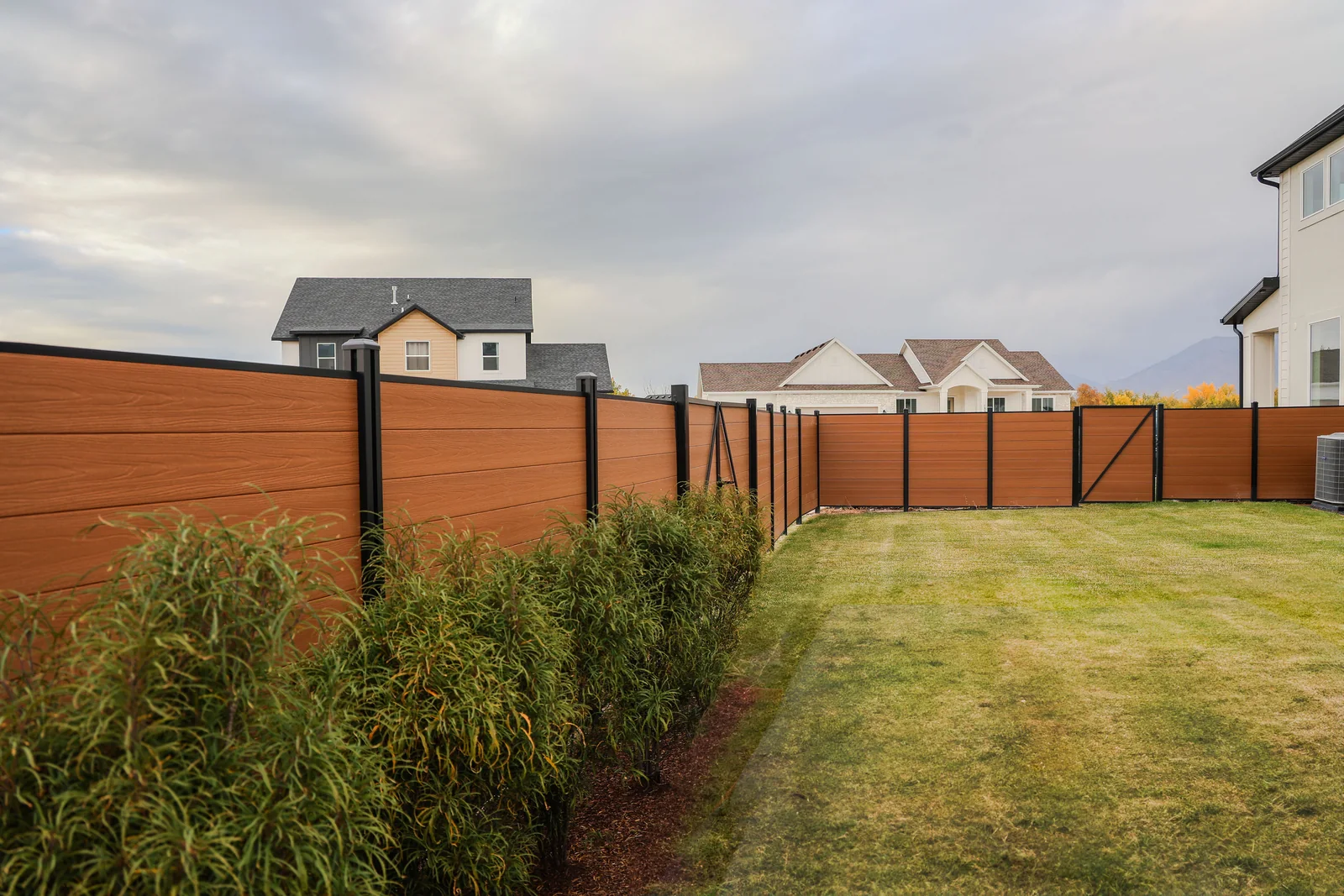
Composite vs wood fencing

Composite outlasts wood by roughly 3× and eliminates the staining cycle, in exchange for a higher upfront cost.

Wood is the historical default for residential fencing because it is cheap to put up. The economics invert by year five, when staining, warping, and rot start to compound. Compoxen composite is engineered to skip that cycle entirely.

Last updated

AttributeCompoxen compositeWoodWinner
Warranty20 yearsNone typical (1-yr installer at best)
MaintenanceZeroStain or seal every 2–3 years
Lifespan25–30 years projected7–15 years typical
Rot resistancePermanentFails at posts and grade contact
Insect resistancePermanentVulnerable (termites, carpenter bees)
Fire ratingClass A (ASTM E84)Untreated wood is combustible
Color stabilityFade-resistant shellGreys without stain
Sound dampeningHigher density, measurableLow
Upfront install $$45–$85 / linear ft$15–$35 / linear ft
DIY-friendlyPro install onlyYes
Look (year 1)Architectural matte / woodgrainNatural wood grain

Choose composite if…

  • You plan to stay in the home more than 5 years.
  • You want zero annual maintenance.
  • You live in a fire-hazard zone (CA WUI, mountain interface).
  • You care about how the fence looks at year 10 and year 20.
  • You want sound dampening from a road or shared boundary.

Choose wood if…

  • You need the cheapest possible install today and will sell within a year or two.
  • You explicitly want a natural-wood grain that greys with age.
  • You are comfortable re-staining every 2–3 years.

Total cost of ownership at year 10

A 150-linear-foot wood fence at $25 installed costs $3,750 up front. Add three rounds of staining at roughly $1.50 per linear foot per round and you are at $4,425 by year nine. Add one round of post repair (rot at grade contact is the most common failure mode) and you are pushing $5,000 with a fence that still has visible greying.

The same 150-foot run in Compoxen at $65 installed is $9,750 up front and $0 in maintenance. The cost lines cross around year 12–15 in most markets, and the composite fence still looks like the day it was installed.

Where wood actually wins

Two cases: short-hold properties (you are flipping or moving inside two years) and a homeowner who specifically wants the natural greying patina of aged cedar. There is nothing wrong with wood; it is just a different product with a different lifecycle.

Where composite wins decisively

Fire-hazard zones (Class A vs combustible), shared boundaries where sound dampening matters, hot/dry climates that punish wood UV exposure, and any homeowner whose top complaint about their last fence was that it kept needing work. See /specificationsfor the underlying material data.

What about composite vs vinyl or metal?

See the dedicated comparisons: composite vs vinyl and composite vs metal.

Ready for a real number?

A certified dealer will reply with pricing, lead time, and availability for your zip code.

Get a Quote