Wind and exposure
An open bench, canyon corridor, or corner lot can experience different loads than a sheltered backyard. Use the system and installation details required for the site.

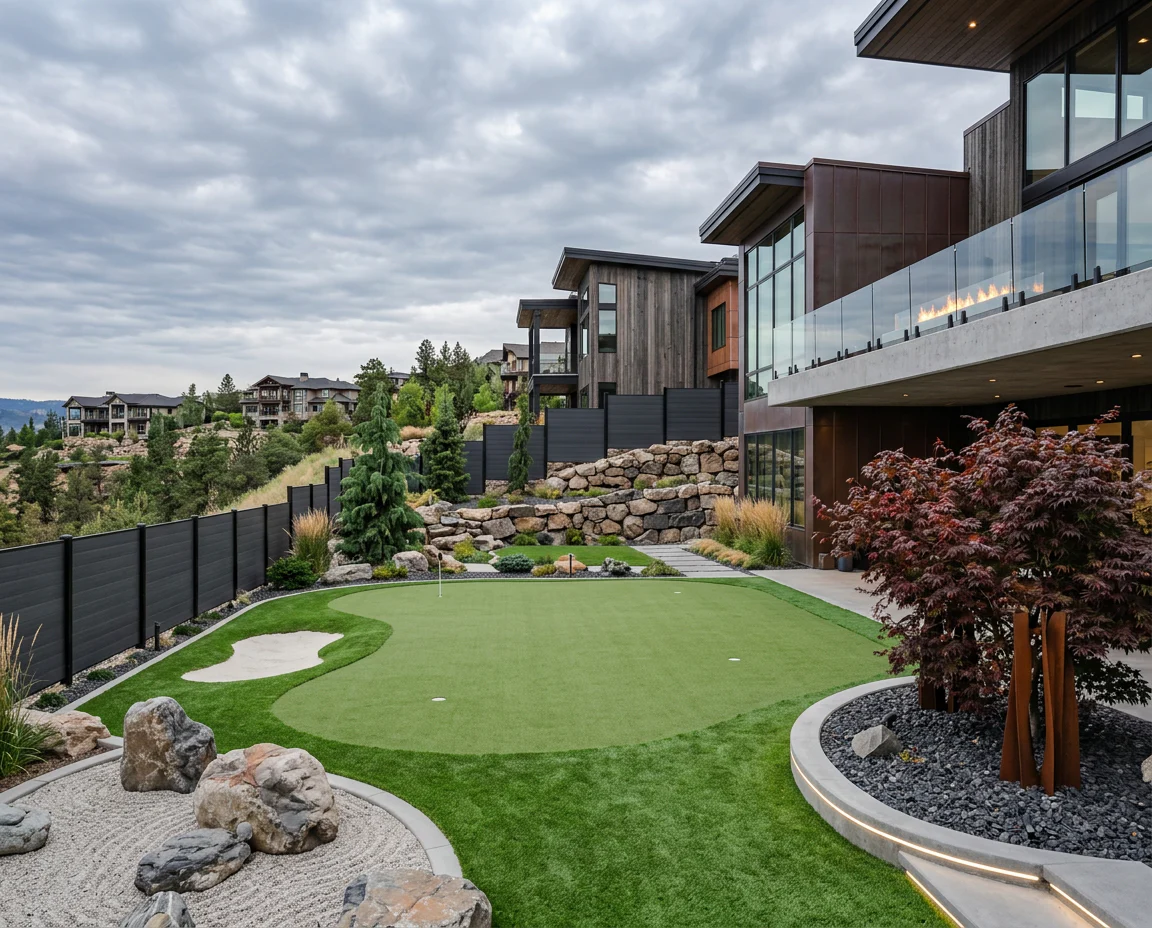
Utah fence comparison
Both can create a low-maintenance privacy fence. The better choice comes down to the look you want, the system quality, the site, and the complete project budget.
The short answer
Composite is a strong candidate when the fence is part of the architecture—not simply a boundary. Embossed boards, deeper colors, and coordinated aluminum components give it a substantial appearance without a recurring stain-and-seal routine.
Vinyl remains a practical option for customers who prefer a bright, uniform fence and want to control the initial material budget. Product grade and installation details matter, so compare complete systems rather than judging by material name alone.
Side-by-side
| Consideration | Composite | Vinyl |
|---|---|---|
| Appearance | Deep woodgrain and a more architectural, wood-like finish. | A smooth, uniform profile, commonly offered in white and neutral colors. |
| Routine care | Usually cleaned with water and mild soap; no stain-and-seal cycle. | Usually cleaned with water and mild soap; no painting or staining. |
| Privacy design | Well suited to substantial full-privacy panels and coordinated gates. | Widely available in full-privacy and semi-privacy profiles. |
| Color strategy | Darker and wood-inspired finishes can coordinate with stone, stucco, and modern exteriors. | Light, consistent colors can work well with traditional homes and bright trim. |
| Project budget | Often carries a higher material cost because of the finish and system components. | Often has a lower initial material cost, depending on grade, post spacing, and gate count. |
| Best fit | Homeowners prioritizing wood-like appearance, low upkeep, and a premium privacy system. | Homeowners prioritizing a clean traditional look and a lower initial purchase price. |
This comparison describes common characteristics, not a promise that every product performs the same way. Review the current manufacturer documents and project-specific requirements before buying.
Utah project planning
An open bench, canyon corridor, or corner lot can experience different loads than a sheltered backyard. Use the system and installation details required for the site.
Long runs, corners, slopes, gate openings, and endpoints change both the material list and the way loads move through a fence.
Compare samples beside the home in natural light. A finish can read differently next to stone, stucco, brick, landscaping, and snow.
Common questions
It depends on the project. Composite is often chosen for a wood-like architectural appearance and substantial privacy panels. Vinyl can be a strong fit when a clean traditional look and lower initial cost matter most.
Both composite and vinyl avoid the recurring staining normally associated with wood. Each still needs occasional cleaning and inspection of posts, gates, and hardware.
Material alone does not decide performance. Product quality, post spacing, footings or surface anchors, gate design, drainage, wind exposure, and correct installation all matter in Utah conditions.
Order the Compoxen sample kit and view all five finishes beside the home, hardscape, and landscaping in morning and afternoon light.