Composite vs Vinyl Fencing: Why Mineral Reinforcement Matters
Vinyl is light and cheap; composite is rigid and quiet. The deciding factor is usually heat tolerance and how the fence feels when you touch it.
· 5 min read · By Compoxen Editorial
Vinyl fencing exists because wood rots. It was the first widely available no-rot answer for residential fencing, and for a flat lot in a temperate climate it is still a perfectly reasonable choice. The reason it lost ground to composite is mineral reinforcement.
What mineral reinforcement actually does
Vinyl is polyvinyl chloride — an all-polymer material with no mineral filler. Composite is a polymer matrix bonded to a high percentage of mineral filler. The difference shows up in three places:
- Heat tolerance. Vinyl warps and bows above sustained temperatures around 90°F. Composite stays flat to 140°F.
- Cold tolerance. Vinyl becomes brittle and cracks on impact below freezing. Composite stays tough to -40°F.
- Density and feel. A vinyl panel is hollow by design. A composite panel is dense, with measurable acoustic dampening.
When vinyl is the right call
A flat residential lot in a mild climate, modest budget, white picket aesthetic — vinyl is fine. We will tell you that on a quote call.
When composite wins
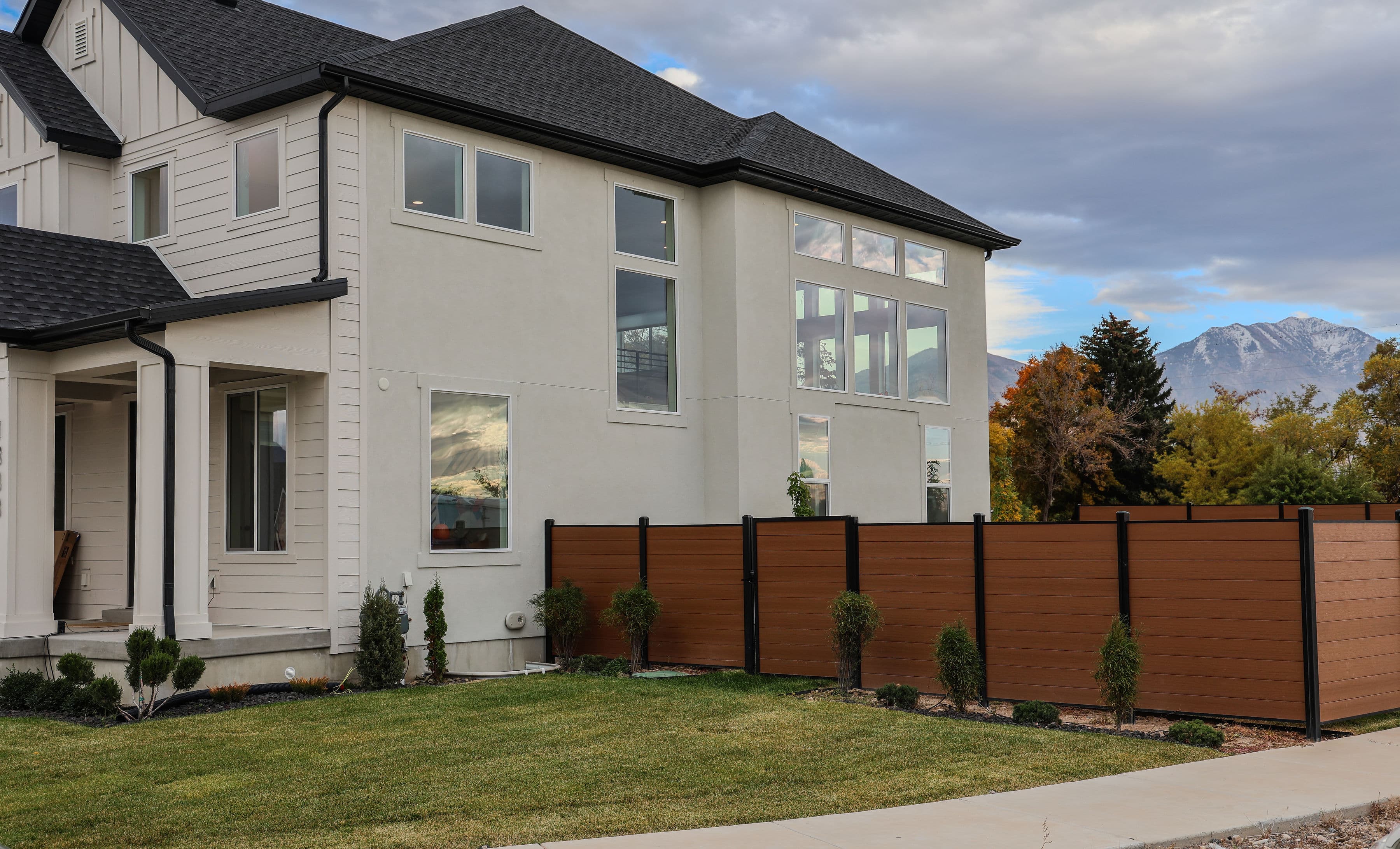
Wide temperature swings (anywhere in the Mountain West and most of the Southwest), shared boundaries where sound dampening matters, deeper architectural color (charcoal, taupe, redwood), and any homeowner who has actually touched both products.
See the full comparison
Composite vs vinyl for the attribute-by-attribute table.
Ready for a real number?
We'll reply with pricing, lead time, and availability for your Utah project.
Get a Quote