Composite Fencing, UV, and Fade Resistance
The science behind a fade-resistant outer shell and what to expect from your composite fence at year 5, year 10, and year 20.
· 4 min read · By Compoxen Editorial
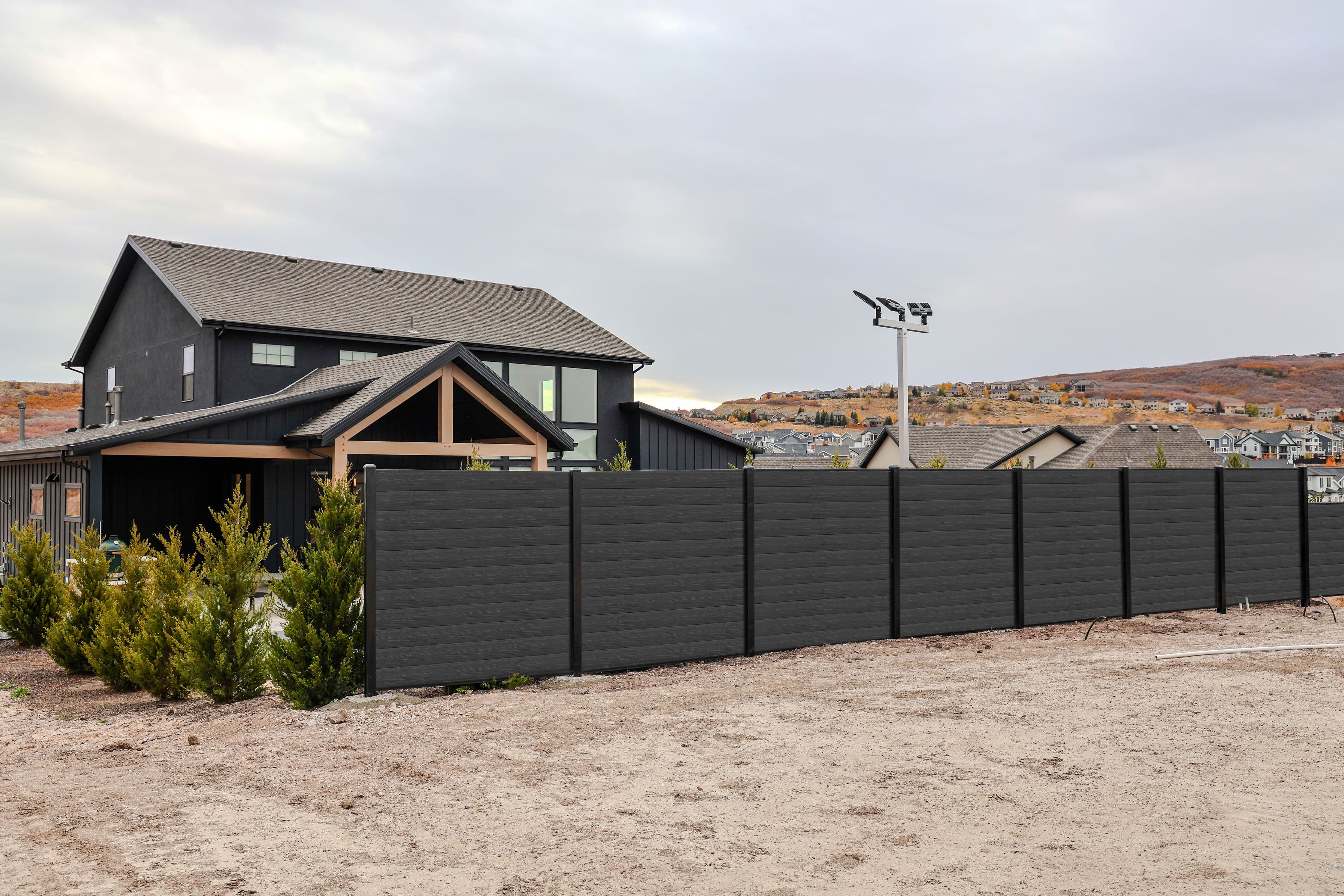
All outdoor materials fade. The question is how fast and how visibly. A Compoxen composite fence is engineered to keep visible color shift inside a tight tolerance over the full 20-year warranty.
Why most fences fade
Color on most outdoor materials sits on the surface as a coating. UV degrades the coating; the coating thins; the substrate shows through. Stained wood is the obvious example; powder-coated metal is the same story over a longer timeline.
How composite avoids it
Color in a Compoxen panel is not a coating. It is co-extruded into a fade-resistant outer shell as a permanent layer with UV-stable pigments. There is no coating to thin. The shell itself is the color.
Year-over-year expectation
- Year 5: Visually indistinguishable from year 1 to a homeowner. Spectrophotometer would detect a slight shift.
- Year 10: Slight overall lightening on direct-sun exposure faces. Side-by-side comparison with year 1 shows a small change; standalone observation does not.
- Year 20: Inside warranty tolerance. Most homeowners do not notice the difference.
Color choice and fade
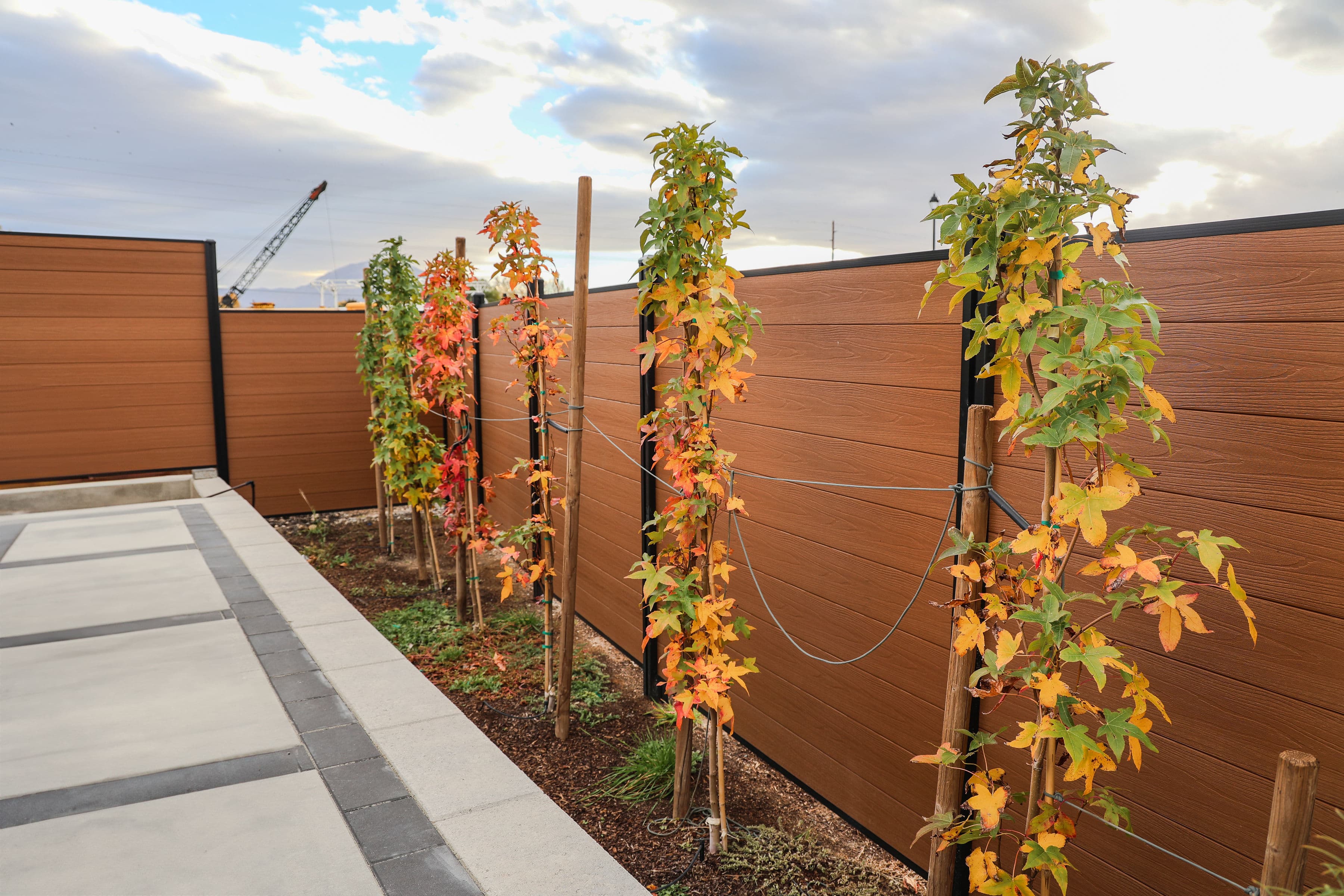
Lighter colors show fade less because there is less starting saturation to lose. Darker colors hold their depth well but any shift is more visible. All five Compoxen colors are inside the same warrantied envelope.
See more
/specifications for the full materials sheet.
Ready for a real number?
We'll reply with pricing, lead time, and availability for your Utah project.
Get a Quote